
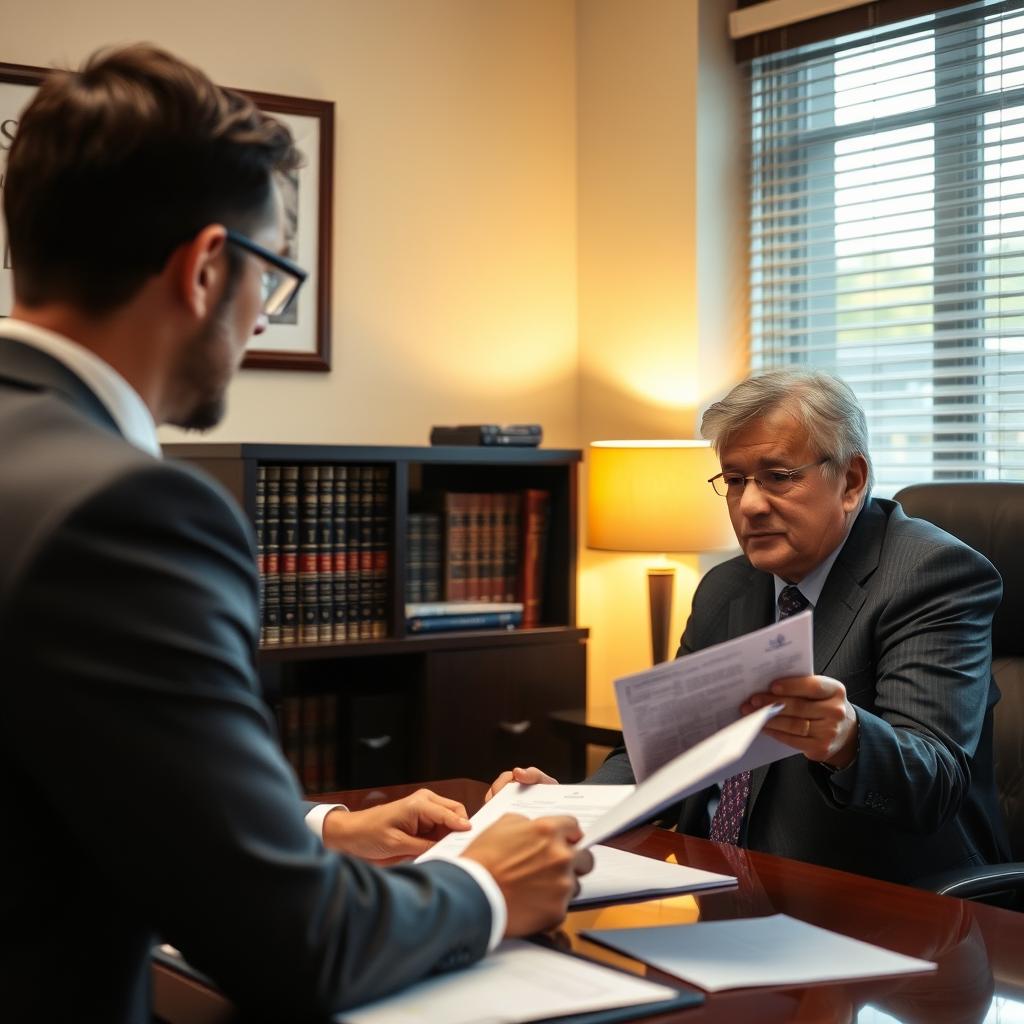
Visa/Permit/Document Fraud lawyer Louisa County, VA
Federal visa, permit, and document fraud charges carry severe consequences under the federal fraud statutes, including 18 U.S.C. §§ 1341-1349. When federal prosecutors bring an indictment in the U.S. District Court for the Western District of Virginia, a conviction can mean years of imprisonment, substantial fines, and no possibility of parole. The U.S. Attorney’s Office for the Western District of Virginia routinely investigates these offenses through agencies like the FBI, ICE, or the Department of State, and the government’s resources can feel overwhelming. For residents of Louisa County—including the communities of Louisa, Mineral, and Zion Crossroads—facing a federal fraud charge means confronting a complex judicial system. The firm’s Of Counsel attorneys and Mr. Sris provide experienced defense representation in federal fraud matters. Contact Law Offices Of SRIS, P.C. at (888) 437-7747 to discuss your situation. Law Offices Of SRIS, P.C. – Advocacy Without Borders.
What Federal Visa/Permit/Document Fraud Means in Louisa County
Federal visa, permit, and document fraud encompasses a broad range of offenses that involve the misuse or falsification of government-issued documents, immigration papers, or official permits to obtain a benefit or avoid a legal obligation. Prosecutors typically charge these crimes under the mail fraud statute (18 U.S.C. § 1341), the wire fraud statute (18 U.S.C. § 1343), or broader conspiracy statutes that cover schemes to defraud the United States. In the Western District of Virginia, which includes Louisa County, the U.S. Attorney’s Office may pursue charges for visa fraud, passport fraud, misuse of a social security number, or filing false immigration documents. The federal sentencing guidelines often result in longer prison terms than state sentences, and because parole was abolished in the federal system, an individual convicted of fraud will serve most of the imposed sentence. Investigations may begin with a consular officer, a USCIS fraud detection unit, or an interagency task force, and they frequently extend over many months before an arrest or indictment.
For a Louisa County resident, a federal fraud case is heard not at the local General District Court but at the U.S. District Court for the Western District of Virginia. That court holds sessions in Roanoke, Charlottesville, Lynchburg, Harrisonburg, Abingdon, and Big Stone Gap, and a defendant may be required to travel to the division where the case is assigned. The prosecution is handled by an Assistant U.S. Attorney with substantial investigative support. Because federal fraud cases often turn on documentary evidence, electronic records, and testimony from multiple witnesses, early involvement of an attorney who understands federal discovery rules and the U.S. Sentencing Guidelines is essential. Mr. Sris and the firm’s Of Counsel attorneys are experienced in challenging the sufficiency of the government’s evidence, examining whether the charged conduct meets the statutory elements of a fraud offense, and negotiating with federal prosecutors to seek a reduction in charges or a favorable sentencing recommendation.
How Mr. Sris and the Firm’s Of Counsel Attorneys Handle Visa/Permit/Document Fraud Cases
Defending a federal fraud charge begins with a thorough review of the investigation’s origins and the indictment’s allegations. The firm’s Of Counsel attorneys, together with Mr. Sris, analyze whether the government obtained evidence through lawful means, whether the charged offense requires proof of a specific intent to defraud, and whether the alleged scheme involved a material misrepresentation. In many document-fraud cases, the defense may focus on whether the defendant knew the documents were fraudulent or whether the defendant acted with an intent to deceive. The firm’s attorneys also evaluate the possibility of pretrial release, as federal detention standards are stricter than those in state court. If the court orders detention, counsel may request a detention hearing to present evidence supporting release under conditions.
Once the factual and legal landscape is clear, Mr. Sris and the firm’s Of Counsel attorneys engage with the U.S. Attorney’s Office to pursue a resolution that protects the client’s interests. In federal fraud cases, the U.S. Sentencing Guidelines use a points-based system that accounts for the loss amount, the number of victims, and the defendant’s role in the offense. Convincing a prosecutor to accept a lower loss figure or to characterize the defendant’s role as minor can significantly reduce the advisory sentencing range. If the case cannot be resolved through a plea agreement, the firm’s attorneys prepare for trial, challenging the government’s documentary evidence, cross‑examining its witnesses, and presenting evidence that the defendant lacked the requisite criminal intent. The firm handles post‑conviction proceedings, including appeals and motions for sentence reduction under the First Step Act when applicable.
About Mr. Sris and the Firm’s Of Counsel Attorneys
Mr. Sris, Owner and Founder of Law Offices Of SRIS, P.C., has concentrated his practice on federal criminal defense since founding the firm in 1997. A former prosecutor, he understands the methods and priorities of government attorneys who build fraud cases. Mr. Sris is admitted to practice in Virginia, Maryland, the District of Columbia, New Jersey, and New York, and he has testified before the Virginia House Courts of Justice Committee in support of 2019 HB 635 (chief patron Del. David Bulova). His professional background includes experience with financial crime investigations and the handling of complex federal litigation.
The firm’s Of Counsel attorneys bring extensive federal trial experience to visa, permit, and document fraud matters. As Of Counsel, they contract directly with the firm and work alongside Mr. Sris to develop defense strategies, review discovery materials, and appear in federal court. Their collective experience spans many years of litigating federal fraud charges in the Eastern and Western Districts of Virginia. Clients benefit from a team approach that pairs Mr. Sris’s strategic oversight with the focused attention of attorneys who have handled similar fraud investigations and trials. The firm’s attorneys communicate with clients throughout the process and are available at (888) 437-7747 to discuss case developments.
Frequently Asked Questions
What is the difference between state and federal fraud charges?
Federal fraud charges are prosecuted by the U.S. Attorney’s Office under federal statutes—such as mail fraud (18 U.S.C. § 1341) and wire fraud (18 U.S.C. § 1343)—and carry sentencing guidelines that often result in longer incarceration without parole. State charges in Virginia are prosecuted by a Commonwealth’s Attorney and governed by the Virginia Code, with sentencing ranges generally lower and parole eligibility possible for certain offenses. The federal system also has mandatory minimums for some fraud offenses and involves more extensive pre‑trial discovery obligations. Cases heard in the U.S. District Court for the Western District of Virginia involve federal prosecutors and federal sentencing rules, making an experienced federal defense lawyer essential.
How do federal sentencing guidelines work in a visa or document fraud case in the Western District of Virginia?
Federal sentencing guidelines calculate a recommended sentence using the offense level (based on the loss amount and specific offense characteristics) and the defendant’s criminal history category. For fraud offenses under 18 U.S.C. §§ 1341-1349, the loss amount is a primary driver; the guideline range increases with higher dollar losses. The court considers acceptance of responsibility, the defendant’s role, and any substantial assistance provided to the government. In the Western District of Virginia, the U.S. Probation Office prepares a presentence report that applies these guidelines, and the judge retained discretion after United States v. Booker. The firm’s Of Counsel attorneys and Mr. Sris work to present mitigating circumstances and argue for a sentence below the advisory range when appropriate.
How does a Virginia lawyer defend against visa/permit/document fraud charges?
Defense strategies in visa, permit, and document fraud cases often focus on challenging the government’s proof of intent, the materiality of the alleged misrepresentation, or the lawfulness of the investigation. A lawyer may file motions to suppress evidence obtained through an unconstitutional search or an improper interrogation. The defense may also demonstrate that the defendant lacked knowledge that a document was fraudulent or that the defendant acted under duress or in reliance on official advice. In many cases, the firm’s Of Counsel attorneys and Mr. Sris negotiate with federal prosecutors to seek a reduction in the charged offense or a favorable plea agreement. If the case proceeds to trial, they cross‑examine government witnesses, introduce witness testimony for the defense, and argue that the prosecution has not met its burden of proof beyond a reasonable doubt.
What should I do if I am facing visa/permit/document fraud charges in Virginia?
If you learn you are under investigation or have been charged, you should immediately contact an experienced federal criminal defense attorney and refrain from discussing the case with anyone except your lawyer. Do not speak with federal agents without counsel present. Preserve any documents, emails, or records that may be relevant, but do not destroy or alter them, as that could lead to additional obstruction charges. The earlier a lawyer becomes involved, the more effectively the defense can challenge the government’s investigative steps and prepare for a detention hearing or a grand jury proceeding. Contact Law Offices Of SRIS, P.C. at (888) 437-7747 to request a consultation about your federal fraud matter.
Do I need a federal criminal defense lawyer for a visa or document fraud case in Louisa County, Virginia?
Yes, because federal fraud cases carry high stakes, including lengthy prison sentences with no parole, and the prosecution is handled by experienced federal prosecutors with substantial resources. An attorney who is familiar with federal court procedures, the U.S. Sentencing Guidelines, and the local practices in the U.S. District Court for the Western District of Virginia can provide a defense that a state‑court practitioner may not. Mr. Sris, who is admitted in five jurisdictions and has practiced federal criminal defense since 1997, and the firm’s Of Counsel attorneys have the experience to evaluate the strength of the government’s case, negotiate with the U.S. Attorney’s Office, and represent clients at trial if necessary. Early engagement with counsel often leads to better outcomes.
How do federal court proceedings differ from state court in Louisa County?
Federal court proceedings are governed by the Federal Rules of Criminal Procedure, not the Virginia Code, and they involve a U.S. District Judge rather than a General District Court judge. The investigative phase is longer, and cases are built by federal agencies such as the FBI, ICE, or the Department of State. Pretrial release is decided under the Bail Reform Act, which permits detention if the defendant is a flight risk or a danger to the community—a standard stricter than in Virginia state court. Discovery in federal court is governed by Rule 16 and the Jencks Act, and sentencing follows the U.S. Sentencing Guidelines rather than the Virginia sentencing scheme. Because of these differences, representation by a lawyer experienced in federal practice is critical.
Fairfax County Federal Criminal Lawyer |
Prince William County Federal Criminal Lawyer |
Manassas Federal Criminal Lawyer |
Falls Church Federal Criminal Lawyer
Primary sources: U.S. District Court for the Western District of Virginia, U.S. Sentencing Guidelines, 18 U.S.C. § 1341 (Mail Fraud).
Attorney advertising. Prior results do not guarantee a similar outcome. Results may vary.
Case results depend on a variety of factors unique to each case.