
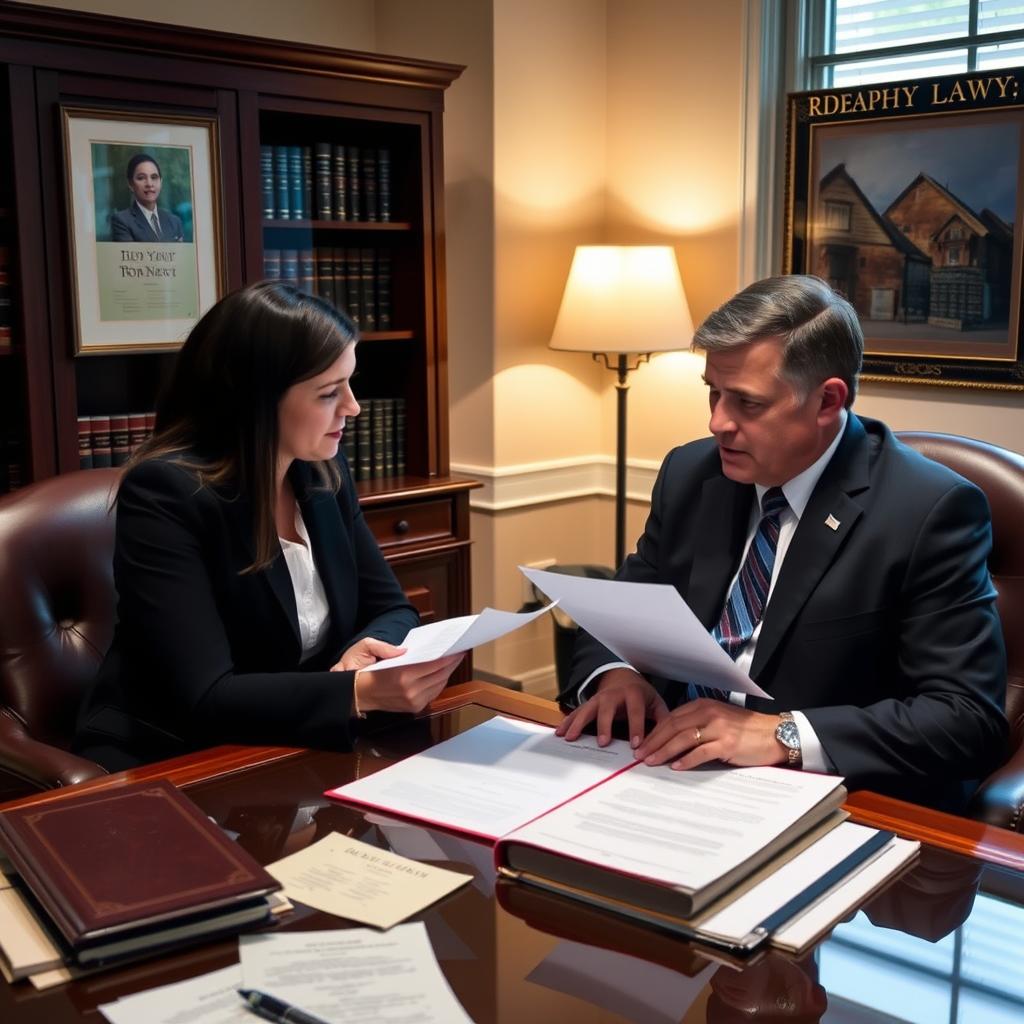
Obstructing Tax Administration lawyer Rappahannock County, VA
The IRS Criminal Investigation Division knocked on your door this morning, or maybe you just received a target letter in the mail. Suddenly, you are facing an allegation that you obstructed federal tax administration—a charge that can upend your life. In Rappahannock County, that investigation moves through the U.S. Attorney’s Office for the Western District of Virginia, and your first call needs to be to an experienced federal defense lawyer who understands how federal tax cases are built. Mr. Sris, Owner and Founder of Law Offices Of SRIS, P.C., has handled federal criminal matters for decades and can start protecting your rights immediately. Reach the firm at (888) 437-7747. Law Offices Of SRIS, P.C. – Advocacy Without Borders.
Defense Strategy Options in a Federal Tax Obstruction Case
Federal obstructing tax administration charges often stem from an IRS audit that escalated, a whistleblower report, or a parallel civil examination. Early involvement of counsel can shape the entire trajectory. Mr. Sris begins by scrutinizing the government’s case for procedural missteps, challenging the willfulness element, and evaluating whether the alleged conduct actually rose to the level of criminal obstruction. In many instances, presenting a full cooperation posture and correcting compliance failures before indictment can persuade a prosecutor to decline charges or pursue a resolution short of trial. Each defense is tailored to the particular facts, not a formulaic approach.
Where an indictment has already been returned, the firm focuses on pretrial motions—suppressing evidence obtained in violation of IRS administrative summons procedures, attacking the sufficiency of the indictment, and preserving every appellate issue. Federal tax obstruction cases involve complex financial records and often require the defense to retain forensic accountants. Mr. Sris’s background in accounting and information systems gives him an uncommon advantage in examining those records and finding weaknesses in the government’s forensic narrative.
What to Expect When Facing Federal Tax Obstruction Charges in Western Virginia
If you are a Rappahannock County resident, your case will likely proceed in the U.S. District Court for the Western District of Virginia—most commonly in the Roanoke or Charlottesville division. A federal criminal tax investigation typically begins with an IRS Special Agent, who may contact you or your accountant. You are under no obligation to speak with investigators without counsel present. Once a referral is made to the U.S. Attorney, the grand jury process determines whether an indictment issues. An indictment initiates the formal prosecution: initial appearance, detention hearing, arraignment, discovery, and a trial date set under the Speedy Trial Act. Throughout that process, Mr. Sris appears in federal court to protect your liberty and advocate for bail and favorable procedural rulings.
Before trial, the government often extends a plea offer. The firm evaluates each offer by comparing the likely sentencing exposure under the United States Sentencing Guidelines against the strength of the government’s proof. Federal sentencing is post‑Booker advisory, meaning the judge has substantial discretion. The firm prepares a comprehensive sentencing memorandum highlighting mitigating factors—personal history, mental health, acceptance of responsibility, and the non‑violent nature of the offense—arguing for a variance below the Guidelines range. Because there is no parole in the federal system, the time you serve is determined almost entirely at the sentencing hearing, making skilled sentencing advocacy critical.
Penalties and Consequences—A Narrative Overview
A conviction for obstructing tax administration carries severe consequences. Under federal law, the maximum prison term can extend to several years per count, and fines can reach into the hundreds of thousands of dollars. In addition to incarceration, the collateral consequences are often the most devastating: loss of professional licenses, exclusion from federal programs, forfeiture of assets, and a permanent felony record that affects employment, housing, and even the right to possess a firearm. The IRS routinely pursues civil fraud penalties alongside the criminal case, meaning a single set of facts can lead to both criminal punishment and a large civil tax debt. Mr. Sris works to minimize every one of these consequences through active motion practice, skilled negotiation, and detailed preparation for trial. Results may vary.
Meet Your Federal Defense Team
Mr. Sris, Owner and Founder, is a former prosecutor who has practiced criminal defense since founding the firm in 1997. He is admitted in Virginia, Maryland, the District of Columbia, New Jersey, and New York, and his background in accounting and information systems gives him a unique edge in federal tax cases. Mr. Sris testified before the Virginia House Courts of Justice Committee in support of 2019 HB 635 (chief patron Del. David Bulova).
The firm brings extensive combined legal experience in federal criminal defense. Together with Mr. Sris, the firm positions every client for the strong $1.
Frequently Asked Questions
What should I do if I am contacted by an IRS Special Agent?
Do not answer questions or provide documents until you have spoken with an experienced federal criminal defense attorney. Anything you say can be used against you in a criminal prosecution. Politely decline to speak, obtain the agent’s business card, and contact counsel immediately. Mr. Sris can then reach out to the agent on your behalf, assess the scope of the investigation, and determine whether a voluntary interview is ever advisable.
Can obstructing tax administration charges be brought against someone who simply made a mistake on their tax return?
The government must prove willfulness—that you intentionally violated a known legal duty. Simple negligence, inadvertence, or a good‑faith misunderstanding of the tax code does not meet the criminal standard. The defense often focuses on the absence of willfulness by showing that the taxpayer reasonably relied on a tax professional, that the mistake was a genuine error, or that the tax law itself was unclear. These arguments can lead to dismissal or acquittal.
How does a federal tax obstruction case proceed after indictment?
After indictment, the case moves through a series of pretrial stages including detention, arraignment, discovery, and motion practice before trial. The government must provide all evidence it intends to use, and the defense can file motions to suppress evidence or dismiss the indictment. Many cases resolve through a plea agreement. If no agreement is reached, the case proceeds to a jury trial in the Western District of Virginia, where the government must prove guilt beyond a reasonable doubt.
Is there parole in the federal prison system?
No, federal parole was abolished in 1987. An individual sentenced to federal prison must serve the full term imposed, reduced only by good‑time credit of up to 54 days per year. This makes the sentencing hearing the single most important stage of the case. Mr. Sris concentrates extensive effort on the sentencing memorandum and oral presentation to achieve the lowest possible sentence under the Sentencing Guidelines.
How do I find a federal criminal lawyer in Rappahannock County?
The firm’s Fairfax Location represents clients in federal matters throughout the Western District of Virginia, including Rappahannock County. Although the firm does not maintain a physical location within the county, Mr. Sris appears regularly in the Charlottesville and Roanoke divisions. To schedule a consultation, call (888) 437-7747.
Are federal tax obstruction charges eligible for diversion or pretrial resolution?
Yes, in appropriate cases, federal prosecutors may agree to a deferred prosecution agreement or a plea to a lesser charge. The firm has successfully negotiated resolutions that resulted in a single misdemeanor tax count where the initial referral contemplated multiple felonies. Early engagement of counsel is the trusted way to explore pretrial diversion. The firm evaluates every client’s eligibility and presents a compelling case for a non‑incarceration outcome.
For a full statutory breakdown of federal criminal tax offenses, see our comprehensive analysis of federal criminal defense law.
Contact Law Offices Of SRIS, P.C. Today. Call (888) 437-7747 to request a consultation. The firm’s Fairfax Location is at 4008 Williamsburg Court, Fairfax, VA 22032. By appointment only.
Attorney advertising. Prior results do not guarantee a similar outcome. Results may vary.
Case results depend on a variety of factors unique to each case.