
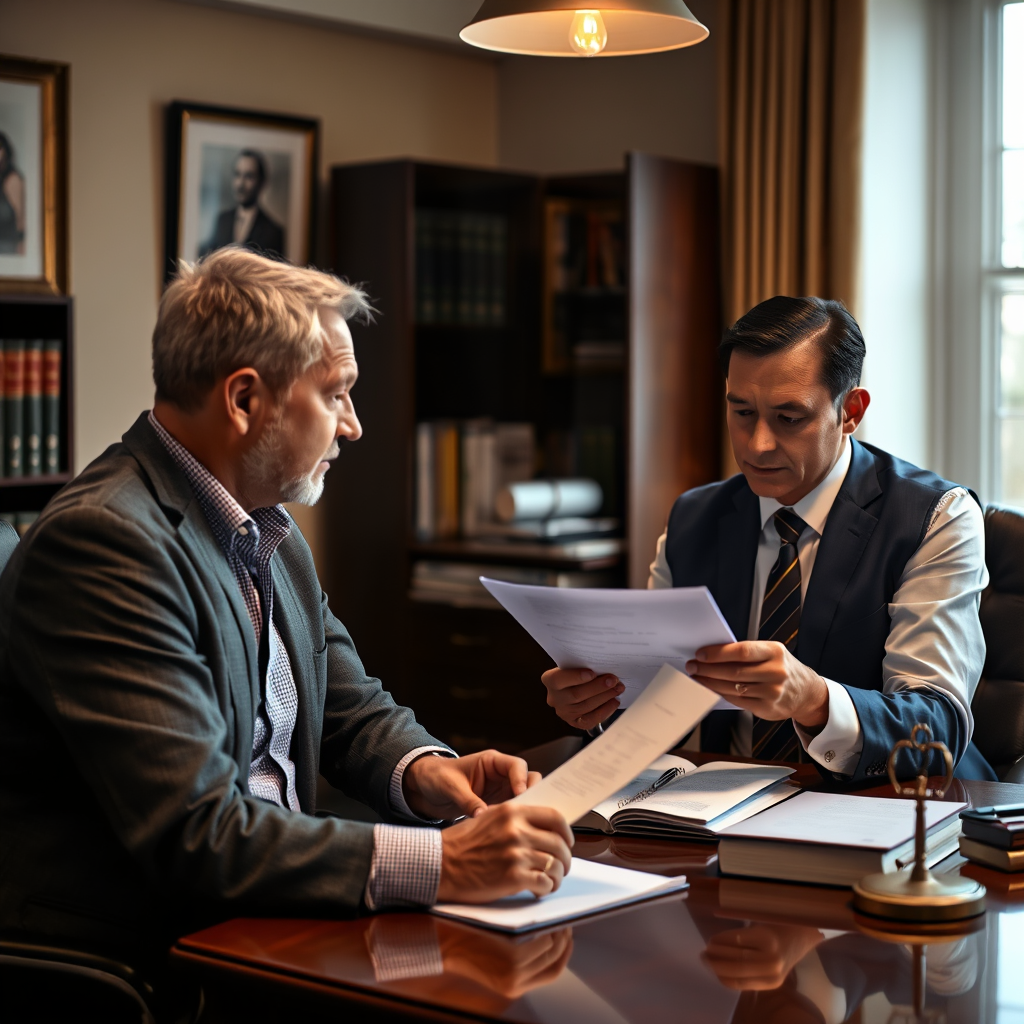
False Statements to a Federal Agent lawyer DC
If you are under investigation or have been charged with making false statements to a federal agent in Washington, D.C., the consequences can reshape your future. Under 18 U.S.C. § 1001, knowingly and willfully making a materially false, fictitious, or fraudulent statement or representation to any branch of the federal government is a felony. The U.S. Attorney’s Office for the District of Columbia prosecutes these cases actively, and the FBI, Capitol Police, Secret Service, and other DOJ components conduct the investigations. A conviction can bring up to five years in prison per count, significant fines, and a lasting federal record that can affect employment, security clearances, and immigration status. Mr. Sris, Owner and Founder of Law Offices Of SRIS, P.C., represents clients facing false statements allegations in the U.S. District Court for the District of Columbia. To schedule a consultation, call (888) 437-7747. Law Offices Of SRIS, P.C. – Advocacy Without Borders.
What False Statements to a Federal Agent Means in Washington, D.C.
Washington, D.C., presents a unique landscape for federal false statements cases. The U.S. District Court for the District of Columbia, located at the E. Barrett Prettyman U.S. Courthouse on Constitution Avenue NW, handles these matters under the Federal Criminal Code. Unlike many jurisdictions where state and federal systems run in parallel, the District is home to a dense concentration of federal agencies, congressional offices, and law enforcement entities. Investigations often stem from FBI interviews, security clearance background checks, congressional testimony, grant applications, or regulatory filings. Because the USAO-DC prosecutes both local and federal crimes, individuals who interact with federal agents in any capacity—whether as witnesses, subjects, or applicants—can face swift and serious legal consequences if a statement is deemed false.
The broad language of 18 U.S.C. § 1001 covers oral and written statements, even those not made under oath. Materiality is key; the statement must have the potential to influence a federal agency’s decision or action, but the government does not need to prove actual reliance or harm. Federal sentencing guidelines apply, and there is no parole in the federal system. In our practice appearing in the U.S. District Court for the District of Columbia, we have observed that these cases often involve extensive documentary evidence, recorded interviews, and complex factual narratives. Early intervention by defense counsel is critical to preserve rights and evaluate the government’s evidence before formal charges are filed.
How Mr. Sris Handles False Statements to a Federal Agent Cases
When you engage Law Offices Of SRIS, P.C., your matter receives focused attention from experienced federal defense counsel. Mr. Sris personally leads the strategy on every federal criminal case, drawing on decades of courtroom experience and his background as a former prosecutor. He works to scrutinize the government’s evidence, challenge the element of materiality and willfulness, and build a defense tailored to the facts.
The process begins with a thorough review of the investigative record: any statements you made, the context in which they were given, the federal agent’s report, and any audio or video recordings. The government must prove that the statement was made “knowingly and willfully,” that it was false, and that it was material. Defense strategies may include demonstrating that the statement was literally true, that any inaccuracy was due to mistake or misunderstanding, or that the statement was immaterial to the federal matter. Where appropriate, the firm engages in early negotiations with the U.S. Attorney’s Office to seek a declination, diversion, or a favorable plea agreement. If trial is necessary, Mr. Sris is prepared to present a vigorous defense before a jury. Throughout the process, you are kept informed and involved, with phone consultations available during business hours. There is no substitute for early, strategic legal representation when your liberty and reputation are on the line.
About Mr. Sris
Mr. Sris, Owner and Founder of Law Offices Of SRIS, P.C., has practiced law since 1997 and is admitted in Virginia, Maryland, the District of Columbia, New Jersey, and New York. A former prosecutor, he understands how federal investigations are built and where prosecutorial and investigative weaknesses can be exploited. His testimony before the Virginia House Courts of Justice Committee in support of 2019 HB 635 (chief patron Del. David Bulova) reflects a commitment to statutory clarity that benefits clients in all practice areas. Mr. Sris personally directs federal criminal defense matters, ensuring that every case receives the attention it deserves.
Mr. Sris provides comprehensive representation that addresses both the legal and practical challenges of a false statements allegation. The firm serves clients throughout the Washington, D.C., area, including Georgetown, Capitol Hill, Dupont Circle, Adams Morgan, Foggy Bottom, and beyond.
Frequently Asked Questions
What is the penalty for making false statements to a federal agent?
Under 18 U.S.C. § 1001, a conviction for making false statements to a federal agent is a felony punishable by up to five years in federal prison per count, along with substantial fines. Beyond incarceration, a felony conviction can result in supervised release, loss of professional licenses, firearms restrictions, and significant damage to reputation. Federal sentences are guided by the U.S. Sentencing Guidelines, and there is no parole in the federal system. The exact penalty depends on factors such as the nature of the false statement, the harm caused, and the defendant’s criminal history.
What must the prosecutor prove in a federal false statements case?
To obtain a conviction, the government must prove beyond a reasonable doubt that the defendant knowingly and willfully made a materially false statement or representation in a matter within the jurisdiction of the federal government. The statement must be false, the defendant must have acted with intent to deceive, and the falsehood must have the potential to influence a federal agency decision. Even if the agency did not actually rely on the statement, materiality can still be established. An experienced defense attorney can challenge each of these elements.
Is it a defense if the statement was not made under oath?
No, an oath is not required for a false statements charge under 18 U.S.C. § 1001. The statute applies to any knowingly false statement made to a federal agent or agency, whether verbal or written, and whether sworn or unsworn. This distinguishes § 1001 from perjury charges, which require an oath or affirmation. Because the scope is broad, many informal interactions with federal investigators can give rise to serious criminal exposure.
What if I corrected the false statement later?
Correcting a false statement may serve as mitigating evidence, but it does not automatically negate criminal liability. The critical issue is whether the original statement was made willfully and with knowledge of its falsity at the time it was uttered. A prompt, voluntary correction can be persuasive to prosecutors or a jury, but the government may still pursue charges if it believes the original intent was to deceive. Legal guidance before making any follow-up statement is essential.
How does the federal government investigate false statements?
The investigation typically involves federal agents from agencies such as the FBI, the Secret Service, the Capitol Police, or agency-specific Offices of Inspector General. Investigations may include interviews, subpoenas for documents, review of electronic communications, and analysis of prior statements. Often, the very interview in which the false statement was allegedly made was recorded. The government will gather evidence to establish what was said and the surrounding context, then present the matter to a grand jury for indictment.
What should I do if I am contacted by a federal agent about a statement I made?
If a federal agent contacts you regarding any statement you have made, you should respectfully decline to speak further and immediately seek legal counsel. Even seemingly innocent conversations can be used against you. You have the right to have an attorney present during any interview. Contacting a federal criminal defense lawyer before responding to questions is critical to protect yourself from potential false statements charges or other related offenses.
Can a false statements charge be dismissed in D.C. Federal court?
Yes, a false statements charge can be dismissed through a pre-trial motion, a successful negotiation with the U.S. Attorney’s Office, or, in rare cases, a declination of prosecution. Dismissal may occur if the government’s evidence is insufficient, if the statement was not material, or if constitutional violations taint the investigation. An attorney can evaluate the case early and advocate for dismissal or a resolution that minimizes consequences. Each case is fact-specific.
What is the difference between false statements and perjury in federal law?
Perjury requires a false statement made under oath in a judicial proceeding, while false statements under § 1001 cover unsworn statements to any federal agency or agent without an oath requirement. Both are serious felonies, but the elements differ: perjury (18 U.S.C. § 1621) requires an oath and a proceeding, whereas § 1001 applies broadly to any matter within federal jurisdiction. The two offenses can overlap if a sworn false statement is also one made to a federal agent.
How does a D.C. Federal defense lawyer defend allegations of false statements?
Defense strategies in D.C. Federal false statements cases include challenging the falsity of the statement, disputing willfulness, arguing the statement was immaterial, or demonstrating that the defendant relied on incorrect information in good faith. Experienced counsel may also examine whether the investigative process was flawed, whether the agent’s notes are inaccurate, or whether the statement is protected speech. Because federal prosecution resources are significant, a comprehensive defense requires careful analysis of all evidence and pursuit of every available legal avenue.
Do I need a lawyer if I am just a witness in a federal investigation in D.C.?
Yes, even as a witness, having legal representation is advisable because any statement you make can subject you to potential false statements charges. A lawyer can help you understand your rights, evaluate the risks of speaking to investigators, and ensure you do not inadvertently incriminate yourself. The line between witness and target is often blurred in federal investigations, and an attorney can help protect your interests at every stage.
For more information, visit our main Federal Criminal Defense in Washington, D.C. page. Our attorneys also serve communities throughout the District, including Georgetown, Spring Valley, Cleveland Park, Chevy Chase, and American University Park. For additional resources, the U.S. District Court for the District of Columbia provides public access to court information.
Attorney advertising. Prior results do not guarantee a similar outcome. Case results depend on a variety of factors unique to each case. Results may vary.