
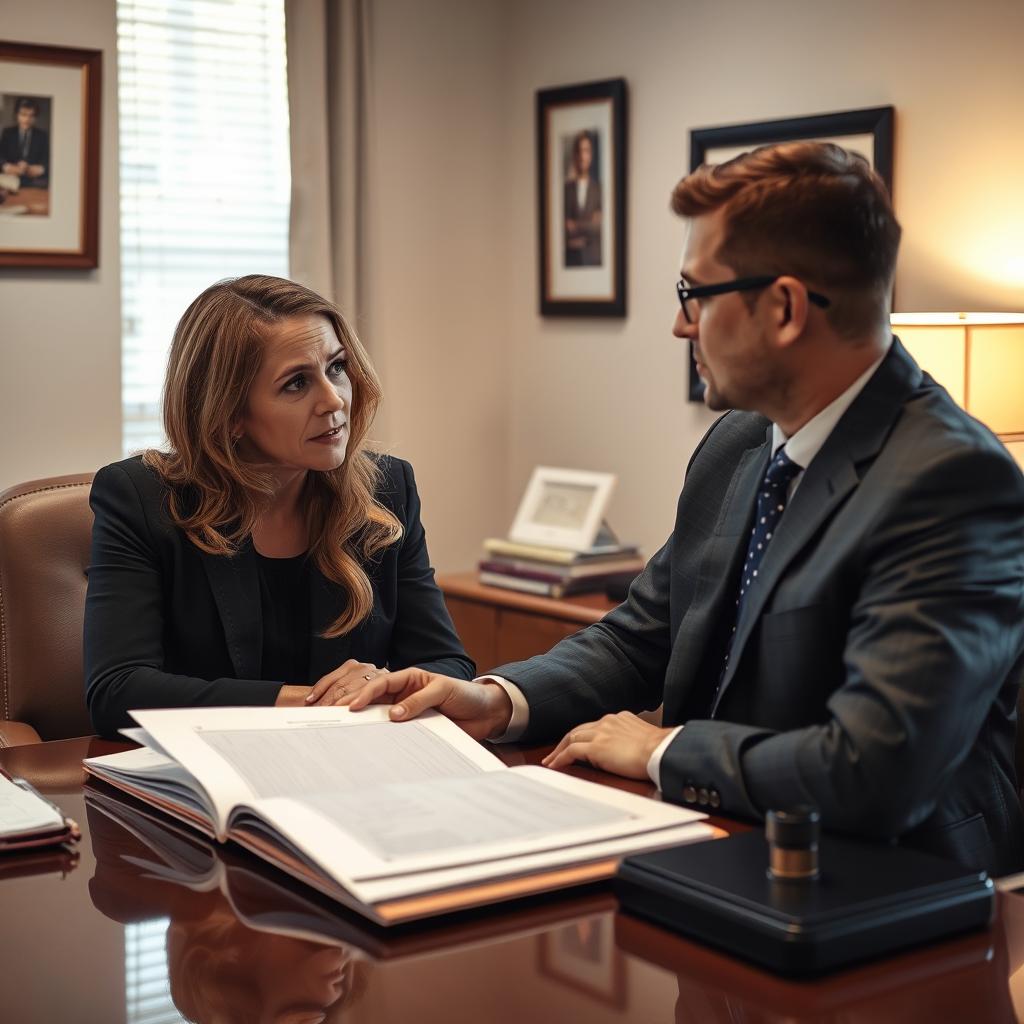
Failure to Register as a Sex Offender lawyer Roanoke County, VA
Federal failure-to-register charges in Roanoke County, Virginia, are prosecuted under the Sex Offender Registration and Notification Act (SORNA), codified at 18 U.S.C. § 2250. These cases move forward in the U.S. District Court for the Western District of Virginia, where the United States Attorney’s Office routinely brings indictments for failure to comply with registration obligations. Because a conviction can result in a substantial federal prison sentence and a lifetime registration requirement under SORNA, anyone facing such a charge needs to act quickly to secure informed legal guidance. Mr. Sris, Owner and Founder of Law Offices Of SRIS, P.C., and his Of Counsel team represent individuals throughout the Roanoke Valley — including Salem, Vinton, Cave Spring, and Hollins — who are confronting federal failure-to-register allegations. Mr. Sris is a former prosecutor, and since 1997 the firm has built an extensive practice defending clients in federal criminal matters across Virginia. The firm understands how the government constructs these cases, from the initial investigation to the grand-jury process, and works to protect clients’ rights through every stage of the proceeding. If you or a family member has been contacted by federal agents or received a target letter relating to a failure-to-register case in Roanoke County, call (888) 437-7747 to schedule a consultation. Law Offices Of SRIS, P.C. – Advocacy Without Borders.
What Federal Failure to Register Means in Roanoke County
Failure to register as a sex offender under federal law is a distinct charge that is separate from any underlying state-court obligation. SORNA requires individuals convicted of qualifying sex offenses to register in each jurisdiction where they live, work, or attend school — and to update that registration within three business days of any change. A knowing failure to register or to update required information can be prosecuted as a federal felony, and the case is typically brought in the federal judicial district where the violation is alleged to have occurred.
For residents of Roanoke County and the surrounding communities, that means the case will proceed in the U.S. District Court for the Western District of Virginia, often in the Roanoke Division. The Roanoke federal courthouse, located at 210 Franklin Road Southwest, hears matters investigated by federal agencies such as the U.S. Marshals Service, which is responsible for enforcing SORNA. The United States Attorney’s Office for the Western District of Virginia handles the prosecution, and the case is governed by the Federal Rules of Criminal Procedure and the United States Sentencing Guidelines.
Because the Western District covers a large geographic area — stretching from the Shenandoah Valley through Southwest Virginia — the Roanoke Division regularly handles cases arising across the Roanoke metropolitan area. Mr. Sris and his Of Counsel are familiar with the practices of the court and the federal prosecutors in this division, and they work to develop a defense strategy that takes into account the client’s individual circumstances, the nature of the registration requirement, and any mitigating factors that may be available under the Sentencing Guidelines.
How Mr. Sris and His Of Counsel Handle Federal Failure-to-Register Cases
When the firm is retained in a federal failure-to-register matter, the first priority is to evaluate the government’s position and to ensure the client understands the procedural path ahead. Mr. Sris and his Of Counsel review the charging instrument — usually an indictment or a criminal complaint — and examine the factual basis for the allegation, including the registrant’s history, the specific registration duties that apply, and the evidence the government intends to rely on.
Because federal prosecutors must prove every element of the offense beyond a reasonable doubt, the defense often focuses on whether the client’s actions were truly “knowing” and whether the government can establish that the client was properly notified of the registration obligation. The team may identify gaps in the government’s proof — for example, that the client was not given clear notice of the specific duty to update a residential address, or that the client’s failure was due to circumstances beyond their control.
If the evidence permits, Mr. Sris and his Of Counsel will negotiate with the Assistant United States Attorney to seek a reduction or dismissal of the charges. When a resolution short of trial is not attainable, the firm is prepared to take the case before a jury. Throughout the process, the client receives guidance on the relevant Sentencing Guidelines factors, the potential for acceptance-of-responsibility adjustments, and the options for presenting mitigation to the court at any sentencing hearing.
About Mr. Sris and His Of Counsel Team
Mr. Sris, Owner and Founder of Law Offices Of SRIS, P.C., is a former prosecutor who has concentrated his practice on federal criminal defense since founding the firm in 1997. He is admitted to practice in Virginia, Maryland, the District of Columbia, New Jersey, and New York, and he has appeared in federal courts across the country. Mr. Sris testified before the Virginia House Courts of Justice Committee in support of 2019 HB 635 (chief patron Del. David Bulova). Mr. Sris and his Of Counsel bring extensive combined legal experience to federal criminal matters. Results may vary.
The firm’s Of Counsel team includes attorneys with deep backgrounds in criminal litigation and federal procedure. All non-Sris attorneys are Of Counsel, and the firm does not employ associates or partners. This structure allows Mr. Sris and his Of Counsel to collaborate closely on each case, drawing on a range of perspectives to develop a defense that is tailored to the client’s specific situation. Clients in Roanoke County and throughout the Western District of Virginia receive representation that is grounded in a thorough understanding of both the governing federal statutes and the local practices of the Roanoke Division.
Frequently Asked Questions
What is the difference between state and federal failure-to-register charges?
Federal failure-to-register charges are prosecuted by the United States Attorney’s Office, carry generally harsher penalties, and are not eligible for parole. While Virginia state law also imposes registration obligations, a federal charge under SORNA is a separate offense that may be brought even if the state does not pursue its own case. Federal charges are investigated by agencies like the U.S. Marshals Service, and any conviction results in a federal criminal record. Because parole was abolished in the federal system, a defendant who receives a prison sentence will serve the vast majority of that term. An experienced attorney can explain how the Sentencing Guidelines apply and what defenses may be available under federal law.
How does a Virginia lawyer defend against federal failure-to-register charges?
Defense strategies may include challenging whether the government can prove a knowing violation, examining whether the client was properly notified of the registration duty, and presenting mitigating circumstances at sentencing. SORNA requires the government to show that the defendant knowingly failed to register or update registration. Mr. Sris and his Of Counsel investigate each case to determine whether the client understood the specific requirement they are accused of violating. Additionally, the team reviews the client’s entire registration history and the notices provided by authorities. If weaknesses exist in the government’s case, they are raised through pretrial motions or negotiations with the prosecutor.
What should I do if I am facing a federal failure-to-register charge in Roanoke County?
Contact a federal criminal defense attorney immediately and do not discuss the facts of your case with anyone except your lawyer. Federal investigations often begin without the subject’s knowledge, and by the time an arrest or indictment occurs, the government may have gathered significant evidence. It is important to preserve all documents related to your registration history, and to refrain from speaking with law enforcement or probation officers before you have legal counsel present. Early involvement of an attorney can influence whether the government seeks pretrial detention and what conditions of release are requested.
What are the potential penalties for a federal failure-to-register conviction?
Penalties for a federal failure-to-register conviction can include a prison term, a fine, and a lifetime registration requirement under SORNA. The specific sentence depends on factors such as the defendant’s criminal history category under the United States Sentencing Guidelines, any acceptance of responsibility, and the underlying sex offense that gave rise to the registration duty. Because the federal system does not offer parole, a person sentenced to incarceration must serve at least 85 percent of the term imposed. In addition, SORNA mandates that a convicted individual continues to register as a sex offender for life in many circumstances.
How does the federal grand-jury process work in the Western District of Virginia?
In the federal system, felony charges — including failure to register — are typically initiated by a grand-jury indictment, not by a preliminary hearing. A grand jury composed of citizens from the Western District reviews the prosecutor’s evidence and determines whether sufficient probable cause exists to return an indictment. The defense is not present during this proceeding, and the standard is lower than the “beyond a reasonable doubt” standard at trial. Once an indictment is returned, the defendant is arraigned before a magistrate judge in the Roanoke Division. At that stage, issues such as pretrial release and the schedule for discovery are addressed.
Where can I find more information about sex-offender registration requirements?
The Virginia State Police maintains the Virginia Sex Offender and Crimes Against Minors Registry, which provides information about state registration obligations. For federal obligations, the U.S. Department of Justice publishes guidance on SORNA compliance. Because registration duties can overlap and because a federal charge often arises from a state-registration requirement, it is important to speak with an attorney who can clarify which obligations apply to your specific situation and whether any defense exists to the federal charge.
For authoritative information, visit the U.S. District Court for the Western District of Virginia and the Virginia Sex Offender and Crimes Against Minors Registry.
Attorney advertising. Prior results do not guarantee a similar outcome. Results may vary.
Case results depend on a variety of factors unique to each case.