
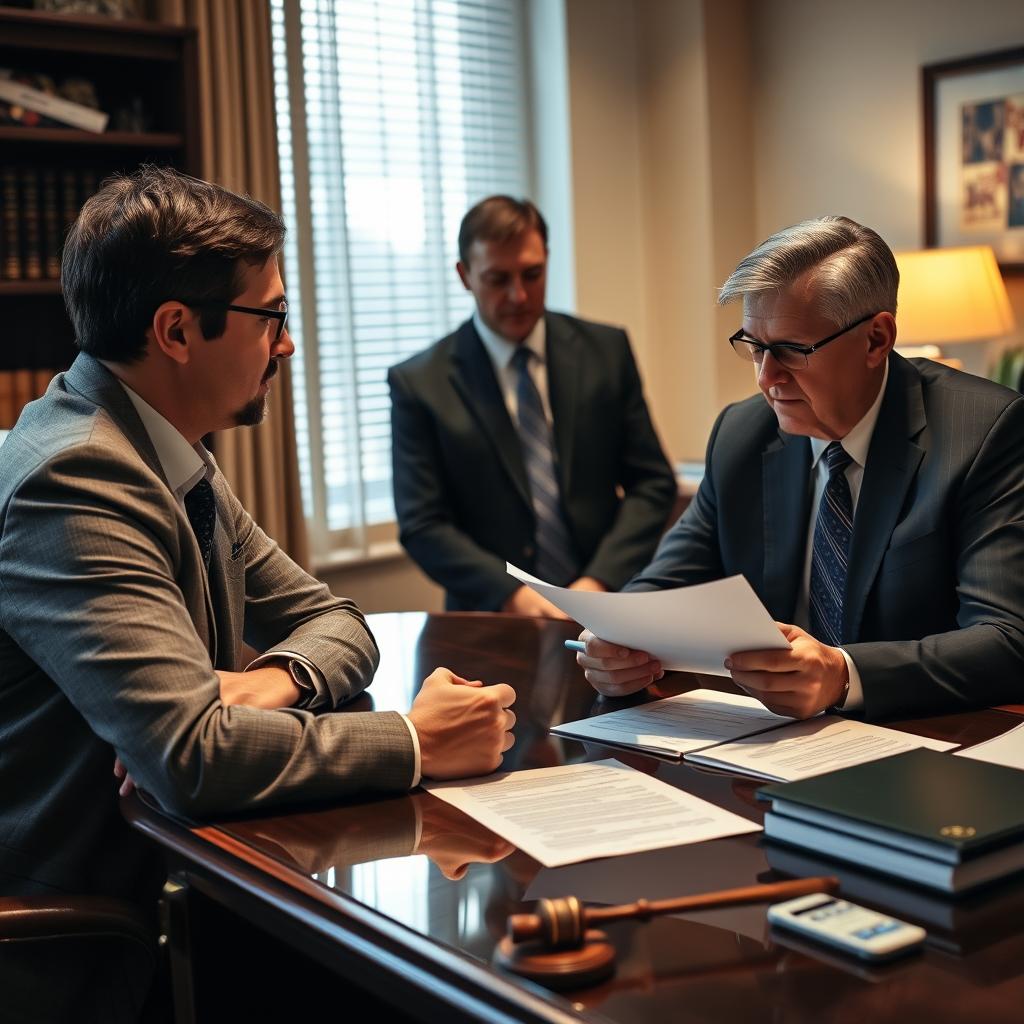
Retaliating Against a Witness lawyer Maryland, MD
Federal charges of retaliating against a witness strike at the integrity of the justice system and are prosecuted actively by the U.S. Attorney’s Office for the District of Maryland. These cases often proceed in the U.S. District Court for the District of Maryland at either the Baltimore or Greenbelt division, and they carry severe penalties under 18 U.S.C. §§ 1503–1520 or §§ 1621–1623. Because federal investigators—including the FBI, DEA, and ATF—build cases thoroughly before an indictment, early engagement by an experienced federal defense attorney is critical. Mr. Sris, Owner and Founder of Law Offices Of SRIS, P.C., and the firm’s Of Counsel attorneys represent individuals facing witness retaliation allegations throughout Maryland. To schedule a consultation about your matter, reach our firm at (888) 437-7747. Law Offices Of SRIS, P.C. – Advocacy Without Borders.
What Retaliating Against a Witness Means in Maryland
Retaliating against a witness, victim, or informant is a federal offense that occurs when a person intentionally harms, threatens, or interferes with someone who has provided information to law enforcement or is expected to testify in a federal proceeding. Although Maryland state courts handle many criminal matters, witness retaliation that implicates federal law, involves interstate conduct, or arises from a pending federal case is prosecuted in the U.S. District Court for the District of Maryland. The statutory framework encompasses obstruction of justice under 18 U.S.C. §§ 1503–1512 and perjury-related offenses under §§ 1621–1623. Penalties vary based on the specific subsection charged and can range from 5 to 20 years of imprisonment, along with substantial fines and supervised release.
Federal prosecutors in the District of Maryland, operating out of the Baltimore and Greenbelt divisions, often pursue these charges alongside underlying crimes such as fraud, drug trafficking, or violent offenses. A conviction can result in consecutive sentences, compounding exposure far beyond what a single state-level offense might carry. The firm’s attorneys understand the local federal court culture and the tactical considerations that the U.S. Attorney’s Office brings to witness-related cases. For individuals under investigation or already charged, obtaining legal representation before an indictment can materially affect the course of the proceedings.
How Mr. Sris and the Firm’s Of Counsel Attorneys Handle Federal Retaliation Cases
When a client faces a witness retaliation allegation, the legal team conducts an immediate and thorough review of the government’s evidence—examining witness statements, electronic communications, and any allegation of threat or coercion. The analysis considers whether the conduct qualifies as protected speech, whether the government’s proof establishes the required intent, and whether procedural or constitutional challenges may apply. Because federal prosecutors often bring retaliation charges alongside substantive offenses, the defense strategy must simultaneously protect the client on multiple fronts. Mr. Sris and the firm’s Of Counsel attorneys prepare for every stage, from the initial appearance and detention hearing to pretrial motion practice and, if necessary, trial.
The firm’s approach emphasizes open communication with the client and a realistic assessment of the government’s case. Where factual weaknesses exist, the team may negotiate with the U.S. Attorney’s Office for a reduction or dismissal of the retaliation count. If a trial is in the client’s best interest, the attorneys prepare to challenge the credibility of cooperating witnesses, contest the interpretation of alleged threats, and present a defense tailored to the specific facts. Every matter is handled with attention to the unique procedural rules of the District of Maryland, including local rules for discovery, scheduling, and pretrial release.
About Mr. Sris and the Firm’s Of Counsel Attorneys
Mr. Sris, Owner and Founder of Law Offices Of SRIS, P.C., has practiced law since 1997 and brings the perspective of a former prosecutor to federal criminal defense. He testified before the Virginia House Courts of Justice Committee in support of 2019 HB 635 (chief patron Del. David Bulova). Admitted in Virginia, Maryland, the District of Columbia, New Jersey, and New York, Mr. Sris devotes his practice to complex federal and state criminal matters.
The firm’s Of Counsel attorneys contribute extensive combined legal experience between Mr. Sris and the firm’s Of Counsel attorneys. Results may vary. Together, the team collaborates on every aspect of a federal witness retaliation case—from challenging the sufficiency of the indictment to developing sentencing mitigation presentations. The firm maintains a Maryland location in Rockville and serves clients across Montgomery County, Prince George’s County, Howard County, and throughout the state.
Frequently Asked Questions
What is witness retaliation under federal law?
Witness retaliation under federal law is the act of harming, threatening, or intimidating another person because that person has provided information to authorities or is expected to testify in an official proceeding. The offense is codified principally at 18 U.S.C. § 1513 and can also be charged under obstruction statutes at §§ 1503–1512. To secure a conviction, federal prosecutors must prove the defendant acted with a retaliatory motive and that the targeted individual participated in a federal investigation or judicial proceeding. Penalties increase significantly when physical force is used or if the retaliation involves a murder attempt.
What are the potential penalties if convicted of retaliating against a witness?
Penalties for witness retaliation depend on the precise statute charged and can range from 5 to 20 years of imprisonment, as well as substantial fines and terms of supervised release. Under 18 U.S.C. § 1513, the maximum term is 20 years if the retaliation involves physical force or an attempt to kill; lesser violations may carry a maximum of 10 years. Financial penalties may also apply. Additionally, the court may impose consecutive sentences if the retaliation charge is combined with an underlying felony. The U.S. Sentencing Guidelines provide a framework that considers factors such as the use of violence, the defendant’s criminal history, and whether the offense involved obstruction of justice.
Do I need a lawyer if I am under investigation for witness retaliation in Maryland?
Yes—you should consult a federal criminal defense attorney immediately if you believe you are under investigation for witness retaliation. Federal investigators often build a case over several months, and statements you make to agents can later be used against you. An attorney can advise you on how to interact with law enforcement, protect your rights during any search or seizure, and potentially present information to the government that might avert an indictment. Early representation also allows your legal team to begin assembling evidence and identifying favorable witnesses before charges are filed.
How does the federal criminal process work in the District of Maryland?
The federal process begins with an investigation by agencies such as the FBI, DEA, or ATF, which may culminate in a grand jury indictment. After indictment, the accused appears for an initial appearance and arraignment in the U.S. District Court for the District of Maryland, either in Baltimore or Greenbelt. Pretrial motions, discovery, and plea negotiations follow. If the case proceeds to trial, a jury hears the evidence. Sentencing is conducted under the advisory federal sentencing guidelines. The timeline varies depending on case complexity and court scheduling.
Can a witness retaliation charge be dismissed before trial?
A witness retaliation charge may be dismissed if the government’s evidence is legally insufficient, if constitutional violations occurred, or if the prosecution agrees to a dismissal as part of a broader resolution. The defense may file a motion to dismiss the indictment for reasons such as a defective charge or a violation of the Speedy Trial Act. In some cases, demonstrating that the alleged threat did not rise to the level of a federal offense or that the targeted person was not a protected witness can lead to a pretrial dismissal. Whether dismissal is achievable depends on the specific facts of the case.
How can a lawyer help defend against witness retaliation allegations?
An experienced federal defense lawyer can challenge the prosecution’s evidence, identify procedural errors, and negotiate with the U.S. Attorney’s Office to seek a reduction or dismissal of charges. Defenses may include showing that the defendant lacked the required intent, that the statement was not a true threat, or that the government’s witnesses are not credible. If pretrial resolution is not possible, the attorney prepares a trial strategy tailored to the complexities of federal court. Throughout the process, the attorney advises on the potential consequences of each decision, including sentencing exposure.
For guidance on your specific situation, reach Law Offices Of SRIS, P.C. at (888) 437-7747.
Federal Criminal Defense Resources in Maryland:
– Federal Criminal Lawyer Montgomery County, MD
– Federal Criminal Lawyer Prince George’s County, MD
– Federal Criminal Lawyer Howard County, MD
– Federal Criminal Lawyer Anne Arundel County, MD
– Federal Criminal Lawyer Frederick County, MD
Primary sources:
– 18 U.S.C. § 1503 (Obstruction of Justice)
– 18 U.S.C. § 1513 (Retaliating Against a Witness)
– U.S. District Court for the District of Maryland
Attorney advertising. Prior results do not guarantee a similar outcome.
Case results depend on a variety of factors unique to each case.