
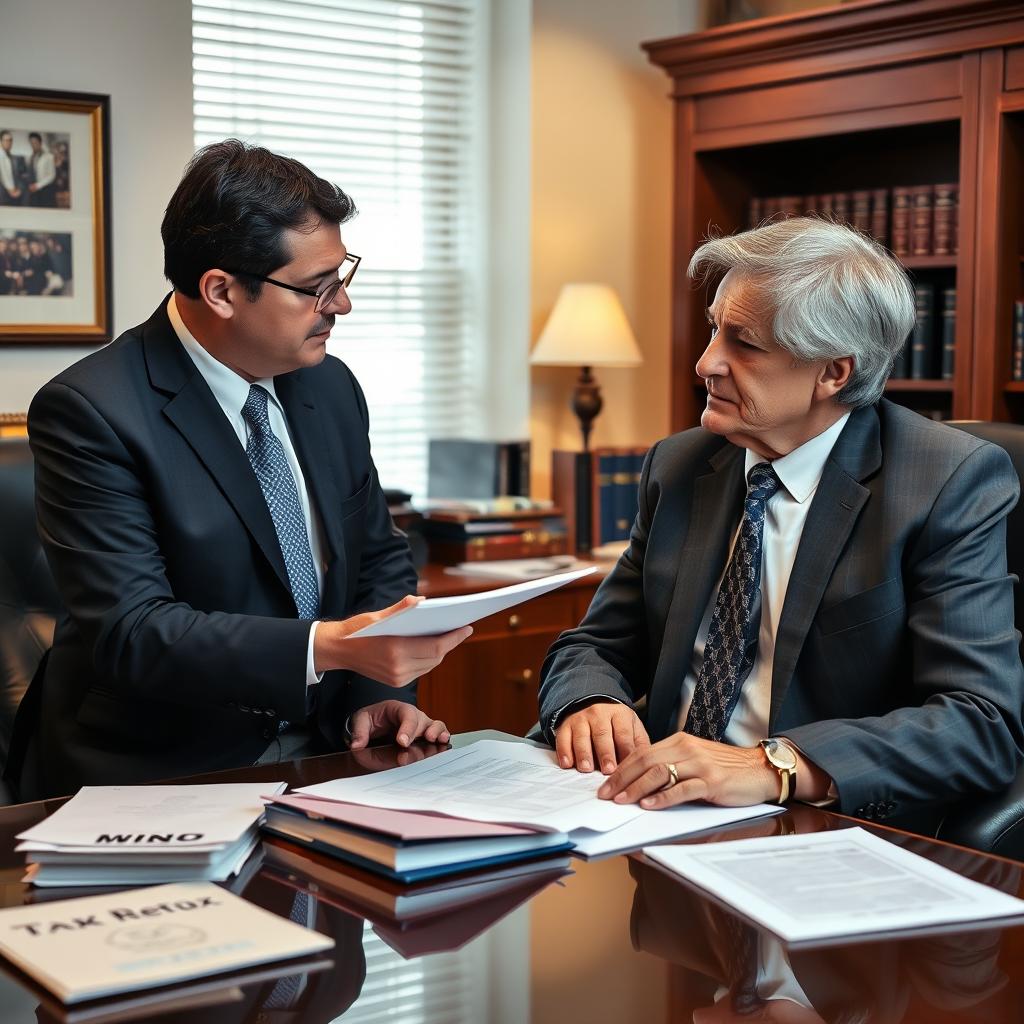
Failure to File Tax Return lawyer Dinwiddie County, VA
When the IRS Criminal Investigation Division opens an inquiry into a failure to file tax returns, the matter quickly moves beyond a civil audit into federal criminal territory. Dinwiddie County residents who learn they are the subject of an IRS‑CI investigation — or who have been contacted by a Special Agent — face prosecution in the U.S. District Court for the Eastern District of Virginia. The United States Attorney’s Office for the EDVA pursues these cases actively, and a conviction under 26 U.S.C. § 7203 can result in a felony record, substantial fines, and a federal prison sentence. Early engagement of experienced counsel is critical because the decisions made before an indictment is returned often shape whether charges are filed and what exposure the accused ultimately faces. Mr. Sris and the firm’s Of Counsel attorneys handle federal tax‑return matters for clients throughout Dinwiddie County, including the communities of Dinwiddie and McKenney. To request a consultation, reach Law Offices Of SRIS, P.C. at (888) 437‑7747. Law Offices Of SRIS, P.C. – Advocacy Without Borders.
What Failure to File Tax Return Means in Dinwiddie County
Although Dinwiddie County itself has no federal courthouse, any federal criminal charge against a county resident is prosecuted in the U.S. District Court for the Eastern District of Virginia, which maintains a Richmond division at 701 East Broad Street. The EDVA is one of the fastest‑moving federal dockets in the country, and its judges routinely impose sentences that reflect the seriousness of tax‑return offenses. The procedural framework is distinct from anything a person would encounter in the Dinwiddie County General District Court or Circuit Court, and attempting to navigate federal practice without counsel who understand the U.S. Sentencing Guidelines and the expectations of the EDVA bench can lead to outcomes that are far harsher than necessary.
The statutory basis for a failure‑to‑file prosecution is 26 U.S.C. § 7203, which makes it a crime to willfully fail to file a return, supply information, or pay a tax when required by the Internal Revenue Code. The government must prove beyond a reasonable doubt that the taxpayer had a legal duty to file, knew of that duty, and intentionally chose not to fulfill it. Negligence, inadvertence, or inability to pay, standing alone, is not enough. Because willfulness is an element of the offense, a defense that focuses on the taxpayer’s state of mind — mistaken belief, reliance on professional advice, or external circumstances that made filing impossible — can sometimes defeat the charge or persuade the U.S. Attorney’s Office to decline prosecution. The IRS Criminal Investigation Division builds these cases by reviewing years of financial records, conducting interviews, and often executing search warrants. When a Dinwiddie County taxpayer is under investigation, the case file is sent to the EDVA for possible grand jury action. Having counsel involved at the investigation stage — before an indictment is returned — can make a material difference in whether charges are presented at all.
How Mr. Sris and His Of Counsel Handle Federal Failure‑to‑File Cases
Federal tax‑return prosecutions require a two‑pronged approach: a thorough examination of the government’s evidence on willfulness, and a proactive strategy to engage with the prosecutor and the IRS before the case hardens into a trial posture. Mr. Sris and the firm’s Of Counsel attorneys begin by obtaining and reviewing the administrative file, including revenue agent reports, Special Agent affidavits, and any bank‑records analysis the IRS has conducted. The goal is to identify whether the government can actually prove the knowledge element — or whether the investigation reveals gaps that can be used to negotiate a declination, a misdemeanor disposition, or a civil resolution that avoids a criminal conviction entirely.
The sentencing landscape is governed by the U.S. Sentencing Guidelines, which calculate a guideline range based on the tax loss and the defendant’s role. In the EDVA, prosecutors routinely seek incarceration even for first‑time offenders, and the advisory guidelines carry significant weight with the court. Mr. Sris and his Of Counsel prepare every failure‑to‑file matter as if it will go to trial, which positions the client to evaluate a plea offer realistically and to understand the risks and benefits of each option. The firm also addresses related exposure — unfiled state returns, civil audit assessments, and potential restitution — so that the client can reach a comprehensive resolution rather than piecemeal outcomes. Throughout the process, the client is kept informed of the procedural roadmap, from initial appearance and detention release through discovery, motions, and, if necessary, trial.
About Mr. Sris and the Firm’s Of Counsel Attorneys
Mr. Sris, Owner and Founder of Law Offices Of SRIS, P.C., has practiced criminal defense since founding the firm in 1997. He is a former prosecutor who understands how the government builds tax‑return cases from the inside, and he brings that perspective to every representation. Mr. Sris is admitted in Virginia, Maryland, the District of Columbia, New Jersey, and New York — a multi‑state credential that enables the firm to address cross‑jurisdictional tax matters seamlessly. The firm’s Of Counsel attorneys add extensive combined legal experience in federal criminal defense, including matters before the Eastern District of Virginia. Together, Mr. Sris and the firm’s Of Counsel attorneys work to achieve favorable outcomes for clients facing federal failure‑to‑file charges. Results may vary.
Frequently Asked Questions
How does a Virginia lawyer defend against failure to file tax return charges?
Defense strategies focus on challenging the government’s proof of willfulness, the element that separates a civil mistake from a federal crime. If the taxpayer acted on the advice of a qualified professional, reasonably believed no return was due, or experienced circumstances that made filing genuinely impossible, the knowledge element may be undermined. An experienced federal defense attorney also reviews whether the IRS complied with all procedural requirements during the investigation and whether evidence was obtained in a manner that can be challenged before trial. When the evidence is strong, the approach shifts to mitigation — demonstrating acceptance of responsibility, making full payment arrangements, and presenting the client’s personal and professional history to argue for a sentence below the guideline range. Each case is assessed based on the specific facts developed during discovery.
What should I do if I am facing failure to file tax return charges in Virginia?
Contact a federal criminal defense attorney immediately and do not discuss the situation with anyone else until you have legal representation. Preserve all financial records, correspondence with the IRS, and any communications you have had with third parties about your tax filings. Do not attempt to explain your side of the story to an IRS Special Agent or prosecutor without counsel present, because anything you say can be used against you. Federal charges move quickly, and the decisions you make in the first days after learning of an investigation often have long‑lasting consequences. An attorney can help you understand the nature of the allegation, the potential exposure under the U.S. Sentencing Guidelines, and the steps you should take — or avoid — while the matter is pending.
What is the difference between state and federal failure‑to‑file charges?
Failure to file a federal tax return is prosecuted by the U.S. Attorney’s Office in U.S. District Court, while state tax‑return offenses are handled by Commonwealth’s Attorneys in Virginia’s state courts. Federal charges carry the possibility of a felony record and imprisonment in a federal facility where parole has been abolished. State charges, by contrast, are handled under Virginia’s tax code and typically proceed in the General District Court or Circuit Court with different sentencing ranges and collateral consequences. The investigation is also different: federal cases are built by IRS Criminal Investigation Division agents with nationwide resources, while state cases are investigated by the Virginia Department of Taxation or local law enforcement. An attorney who handles federal tax‑return matters must be familiar with the Federal Rules of Criminal Procedure, the U.S. Sentencing Guidelines, and the practices of the specific U.S. District Court division.
Do I need a lawyer for a federal tax‑return matter in Dinwiddie County?
Yes — a federal criminal defense lawyer can help protect your rights and work toward favorable outcomes in your case. Federal tax‑return charges are serious; the government has massive investigative resources, and prosecutors are experienced in obtaining convictions. Without counsel, a taxpayer may inadvertently waive rights, make incriminating statements, or fail to recognize defenses that exist in the evidence. An attorney can also navigate the complex sentencing guidelines and present mitigation that a judge can consider. Even before charges are filed, an attorney can often intervene to attempt to resolve the matter civilly or negotiate a pre‑indictment disposition. The earlier you involve counsel, the more options are likely to be available. For a consultation, reach Law Offices Of SRIS, P.C. at (888) 437‑7747.
What happens after a federal failure‑to‑file charge is filed in the Eastern District of Virginia?
Once an indictment is returned, the defendant is brought before a magistrate judge for an initial appearance, where the charges are read and bail conditions are set. A detention hearing may follow if the government argues the person is a flight risk or a danger to the community. The case then proceeds through the discovery process, where the government must turn over evidence, and the defense can file motions to suppress evidence or dismiss charges. Plea negotiations often occur throughout this period. If no resolution is reached, the case proceeds to trial before a district judge. Sentencing, if the defendant is convicted, is governed by the U.S. Sentencing Guidelines and the factors listed in 18 U.S.C. § 3553(a). The EDVA is known to move cases efficiently, so the timeline can be shorter than in many other federal districts.
How do the U.S. Sentencing Guidelines apply to failure‑to‑file tax return cases?
The guidelines calculate a base offense level tied to the tax loss amount, with upward adjustments for sophisticated means or a leadership role and downward adjustments for acceptance of responsibility. The resulting guideline range is expressed in months of imprisonment, and while the guidelines are advisory after United States v. Booker, 543 U.S. 220 (2005), judges in the Eastern District of Virginia give them substantial weight. A tax loss exceeding certain thresholds can push the guideline range into a zone where probation is unavailable and incarceration is required. The defense may argue for a variance based on the defendant’s character, history, and the circumstances of the offense. Early cooperation, full payment of back taxes, and a demonstrated effort to correct past non‑compliance can lower the guideline calculation and influence the judge’s final sentence.
Related Federal Criminal Defense Pages:
Federal Criminal Lawyer Fairfax County •
Federal Criminal Lawyer Fairfax (City) •
Federal Criminal Lawyer Falls Church (City) •
Federal Criminal Lawyer Prince William County •
Federal Criminal Lawyer Manassas (City)
Authoritative References:
U.S. District Court for the Eastern District of Virginia •
26 U.S.C. § 7203 — Willful Failure to File Return •
IRS Criminal Investigation
Attorney advertising. Prior results do not guarantee a similar outcome.
Results may vary.
Case results depend on a variety of factors unique to each case.