
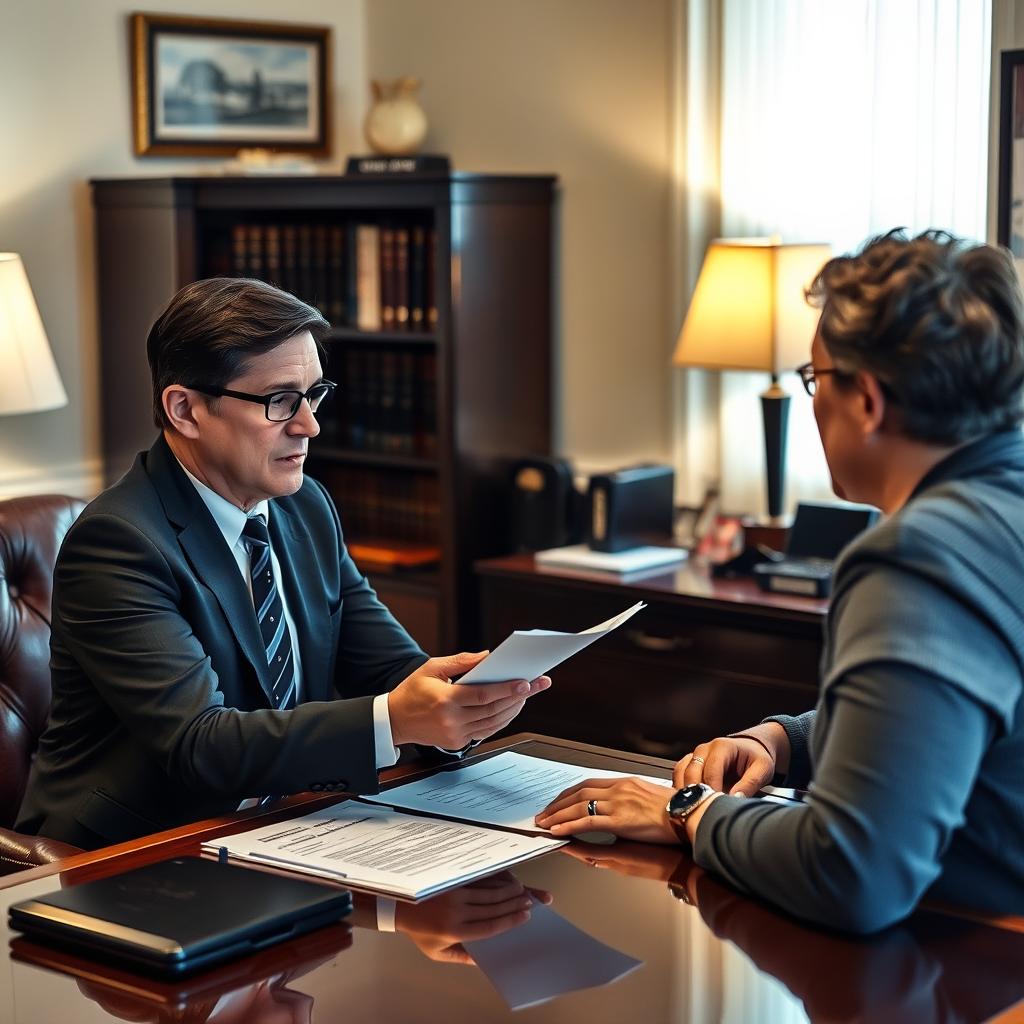
Trafficking in Counterfeit Goods lawyer Dinwiddie County, VA
Federal charges alleging trafficking in counterfeit goods bring the full weight of the United States government into a case. In Dinwiddie County and throughout central Virginia, these matters are prosecuted by the U.S. Attorney’s Office in the Eastern District of Virginia, often after investigations by Homeland Security Investigations, the FBI, or other federal agencies. A conviction under federal law carries significant exposure—including substantial prison time and fines—under the U.S. Sentencing Guidelines, which operate with no parole in the federal system. When you are facing a federal indictment or are the subject of a federal investigation, having counsel with experience in the Eastern District of Virginia and its Richmond division is critical. Mr. Sris, Owner and Founder of Law Offices Of SRIS, P.C., and the firm’s Of Counsel attorneys represent individuals in Dinwiddie County charged with trafficking in counterfeit goods and related federal offenses. To request a consultation, reach the firm at (888) 437-7747. Law Offices Of SRIS, P.C. – Advocacy Without Borders.
What Trafficking in Counterfeit Goods Means in Dinwiddie County
Trafficking in counterfeit goods is a federal offense that involves the intentional trafficking or attempted trafficking of goods or services bearing a counterfeit mark. The federal statute prohibits the manufacture, sale, distribution, or possession with intent to sell counterfeit items that are identical to or substantially indistinguishable from registered trademarks. The Department of Justice pursues these cases actively, often linking them to larger schemes of fraud, money laundering, or organized criminal activity. In Virginia, the U.S. District Court for the Eastern District of Virginia—Richmond Division—handles federal prosecutions arising in Dinwiddie County and surrounding communities. The court is located at 701 East Broad Street in Richmond, and its proceedings are governed by the Federal Rules of Criminal Procedure and the U.S. Sentencing Guidelines.
For a person charged in Dinwiddie County, the case proceeds through a distinct federal process: an initial appearance and detention hearing before a magistrate judge, grand jury indictment, arraignment, discovery, pretrial motions, and, if not resolved, trial. Throughout every stage, the U.S. Attorney’s Office has substantial resources to build its case. Because federal sentencing is determined by a point‑based guideline calculation—taking into account offense characteristics, loss amount, number of infringing items, and the defendant’s criminal history—the potential sentence can be extremely severe. There is no parole in the federal system, and early engagement of defense counsel is essential to protect a client’s rights and to identify any defenses, such as lack of knowledge, insufficient evidence of a counterfeit mark, or constitutional challenges to searches and seizures.
How Mr. Sris and the Firm’s Of Counsel Attorneys Handle Federal Counterfeit Goods Cases
When a client in Dinwiddie County faces a federal trafficking investigation or indictment, Mr. Sris and the firm’s Of Counsel attorneys focus on a thorough review of the government’s evidence, the investigative steps that preceded any charge, and the applicable sentencing exposure. The approach includes examining the validity of search warrants, the chain of custody for seized goods, the reliability of expert testimony regarding the alleged counterfeit mark, and whether the government can prove each element of the offense beyond a reasonable doubt. Early in the process, the firm works to secure a client’s pretrial release, often by presenting a strong bail package to the magistrate judge.
The firm’s representation in the Eastern District of Virginia is grounded in a practical understanding of how federal prosecutors build trademark‑counterfeiting cases. That understanding informs every decision—from challenging the admissibility of evidence to negotiating with the government for a favorable plea agreement when appropriate. Mr. Sris and the firm’s Of Counsel attorneys also prepare for trial, developing arguments that may lead to reduced charges, dismissal of counts, or a more favorable guideline calculation at sentencing. At every step, the client is fully informed about the procedural posture of the case and the realistic range of outcomes, so they can make informed decisions about their defense.
About Mr. Sris and the Firm’s Of Counsel Attorneys
Mr. Sris, Owner and Founder of Law Offices Of SRIS, P.C., has built a multi‑state practice since 1997. He is a former prosecutor who understands how the government assembles and prosecutes federal criminal cases. Admitted in Virginia, Maryland, the District of Columbia, New Jersey, and New York, he appears in federal district courts throughout the firm’s footprint. Mr. Sris testified before the Virginia House Courts of Justice Committee in support of 2019 HB 635 (chief patron Del. David Bulova).
The firm’s Of Counsel attorneys are experienced in federal criminal defense and contribute to the preparation of every serious federal matter. Together, Mr. Sris and the firm’s Of Counsel attorneys provide representation in the Eastern District of Virginia for clients in Dinwiddie County and beyond. The firm accepts only a limited number of complex cases, ensuring that each client receives focused attention. For a consultation about a trafficking in counterfeit goods charge, reach Law Offices Of SRIS, P.C. at (888) 437-7747.
Frequently Asked Questions
What is trafficking in counterfeit goods under federal law?
Trafficking in counterfeit goods is a federal crime that involves intentionally selling or attempting to sell goods with a counterfeit trademark. The offense applies to items that display a mark identical to or substantially indistinguishable from a federally registered trademark, when the defendant knows the mark is counterfeit. The federal government prosecutes these cases to protect intellectual property and to disrupt commerce in illicit goods. Conviction can lead to imprisonment, substantial fines, and an order to pay restitution to the trademark holder.
What are the potential penalties for a federal conviction?
A conviction for trafficking in counterfeit goods carries significant penalties under the U.S. Sentencing Guidelines, including the possibility of a lengthy prison sentence and large fines. The guidelines calculate the offense level based on the value of the infringing items and the scope of the operation. Multiple counts or a prior criminal history can increase the sentence dramatically. Because the federal system has no parole, a defendant serves the majority of any prison term imposed. A knowledgeable defense attorney can advocate for a departure or variance that may reduce the guideline range.
How does the federal court process work in the Eastern District of Virginia?
After an arrest or indictment, a federal case in the Eastern District of Virginia begins with an initial appearance before a magistrate judge, where bail is set. A grand jury returns an indictment, and the defendant is arraigned. Discovery follows, during which the government must disclose the evidence it intends to use. Pretrial motions may challenge the admissibility of evidence or the sufficiency of the charges. If the case is not resolved by plea, it proceeds to trial before a district judge, and, if convicted, to a separate sentencing hearing.
Do I need a lawyer if I am facing a federal trafficking charge?
Yes, retaining an attorney with experience in federal criminal defense is critical when you face a trafficking in counterfeit goods charge. Federal prosecutors have extensive resources, and the guidelines create a complex sentencing framework. Without counsel, an individual risks making statements that can be used against them and may miss deadlines that affect the case. A defense attorney can evaluate the government’s evidence, negotiate with the U.S. Attorney’s Office, and present a strong defense at trial if necessary.
How can a defense attorney challenge trafficking in counterfeit goods charges?
Defense strategies may include challenging whether the government can prove the items were counterfeit, whether the defendant knew the mark was counterfeit, or whether constitutional violations occurred during the investigation. An attorney may file motions to suppress evidence obtained from an unlawful search, challenge the reliability of expert testimony, or argue that the alleged conduct does not meet the federal statutory definition. Each case turns on its specific facts, and a thorough investigation of the prosecution’s evidence is the foundation of an effective defense.
What should I do if I learn I am under investigation?
If you believe you are under federal investigation for trafficking in counterfeit goods, do not speak with law enforcement without a lawyer present. Contact an experienced federal criminal defense attorney immediately. Preserve any relevant documents and electronic records that may be exculpatory, but do not alter or destroy evidence. An attorney can communicate with investigators on your behalf, attempt to narrow the scope of the inquiry, and work to resolve the matter before an indictment is returned.
For more information about federal criminal defense in related Virginia localities, see:
Federal Criminal Lawyer Fairfax County |
Federal Criminal Lawyer Fairfax (City) |
Federal Criminal Lawyer Falls Church (City) |
Federal Criminal Lawyer Prince William County |
Federal Criminal Lawyer Manassas (City)
Authoritative sources for federal criminal law:
U.S. District Court for the Eastern District of Virginia —
U.S. Sentencing Commission Guidelines Manual —
DOJ Intellectual Property Crime
Attorney advertising. Prior results do not guarantee a similar outcome. Results may vary.
Case results depend on a variety of factors unique to each case.